Hawthorn Berry Tea: Why Choose It, Who Is It For, Benefits, Brewing and Safety
Introduction: A Traditional Berry With a Modern Wellness Appeal
Hawthorn berry tea is a caffeine-free herbal infusion made from the dried fruits of trees and shrubs belonging to the genus Crataegus. Hawthorn plants belong to the rose family, Rosaceae, and grow across Europe, Asia and North America.
The berries—more accurately described botanically as small pomes—develop in clusters and usually ripen into shades of red, deep orange or dark purple, depending on the species. When dried and infused, they produce a mildly tart, fruity and earthy beverage.
Hawthorn has a particularly strong historical association with cardiovascular wellness. This reputation has made hawthorn tea popular among those seeking a natural “heart tea.”
However, an important distinction is often missing from online articles and product descriptions:
Most human cardiovascular research has evaluated standardised extracts—commonly made from hawthorn leaves and flowers—not ordinary hawthorn berry tea.
Hawthorn berry tea may still be enjoyed as a traditional, plant-based wellness beverage. But it should not be marketed as a treatment for heart failure, hypertension, irregular heartbeat, blocked arteries or high cholesterol.
This guide explains why someone may choose hawthorn berry tea, who it may be suitable for, what research suggests, how to brew it and who should consult a healthcare professional before drinking it regularly.

What Is Hawthorn Berry Tea?
Hawthorn berry tea is prepared by steeping or gently simmering dried hawthorn fruits in water.
Commonly discussed hawthorn species include:
-Crataegus monogyna
-Crataegus laevigata
-Crataegus pinnatifida
-Crataegus oxyacantha—an older name used in some literature
-Other regional Crataegus species
The fruits, leaves and flowers are not chemically identical. Therefore, the term “hawthorn” is too broad when interpreting scientific evidence.
A product should ideally identify:
-The botanical species
-The plant part
-Whether it contains berries alone or leaves and flowers
-Whether it is a plain dried herb, tea blend or standardised extract
This information helps consumers understand exactly what they are buying.
What Does Hawthorn Berry Tea Taste Like?
Hawthorn berry tea generally has a:
-Mildly tart taste
-Light natural fruitiness
-Gentle earthy character
-Slight astringency
-Subtle sweetness depending on the berry variety
-Deep amber, reddish-brown or golden infusion
It is usually less sharply sour than pure hibiscus tea and less naturally sweet than liquorice-root tea.
The flavour becomes stronger when the dried berries are lightly crushed before brewing or gently simmered rather than briefly steeped.
Hawthorn pairs well with:
-Hibiscus
-Rosehip
-Cinnamon
-Ginger
-Orange peel
-Amla
-Rooibos
-Rose petals
-Cardamom
-Apple pieces
Adding other herbs changes the safety profile. For example, a hawthorn-and-hibiscus blend may not be suitable for someone whose blood pressure is already low.
Why Choose Hawthorn Berry Tea?
1. It Is Naturally Caffeine-Free
Pure hawthorn berry tea does not contain caffeine.
It may suit people who:
-Want to reduce coffee consumption
-Are sensitive to caffeine
-Experience caffeine-related palpitations
-Want a warm beverage in the evening
-Prefer an alternative to green or black tea
-Want to avoid caffeine close to bedtime
A blend containing black, green, white or oolong tea will contain caffeine, even if hawthorn appears in the product name.
2. It Offers a Fruit-Based Alternative to Floral Herbal Tea
Many caffeine-free teas are dominated by mint, chamomile or strongly aromatic flowers. Hawthorn provides a different experience: fruity, mildly tart, earthy and comparatively subtle.
It may particularly appeal to people who enjoy:
-Rosehip tea
-Hibiscus tea
-Berry infusions
-Amla tea
-Lightly sour beverages
-Unsweetened fruit teas
3. It Contains Natural Plant Polyphenols
Hawthorn berries contain several classes of plant compounds, including:
-Flavonoids
-Proanthocyanidins
-Phenolic acids
-Anthocyanins
-Tannins
-Triterpenes
Their concentration depends on the hawthorn species, ripeness, growing conditions, drying process, storage and brewing method.
Laboratory studies suggest antioxidant and vascular mechanisms, but detecting antioxidant activity in a laboratory does not prove that drinking hawthorn tea prevents heart disease. A review of hawthorn as a food ingredient describes its polyphenols and potential applications while also showing that much of the evidence is preclinical. Food and phytochemical review
4. It Can Replace Sugary Evening Drinks
Unsweetened hawthorn tea contributes fluid without the added sugar found in many:
-Soft drinks
-Packaged fruit beverages
-Sweetened iced teas
-Flavoured coffees
-Energy drinks
-Commercial wellness beverages
This practical substitution may be more meaningful than many exaggerated detox claims.
The benefit depends on keeping the drink unsweetened or only lightly sweetened.
5. It Has a Long History of Traditional Use
Different hawthorn species have been used in European, Chinese and other traditional practices. Hawthorn preparations have historically been associated with:
-Cardiovascular support
-Circulation
-Digestion
-Restlessness
-General vitality
-Food and preserved-fruit preparations
Traditional use is culturally valuable, but it is not the same as clinical proof.
A responsible hawthorn tea article should explain tradition without converting every historical use into a modern medical claim.
6. It Encourages a Slower Wellness Ritual
Hawthorn berries take longer to infuse than delicate leaves or flowers. Lightly crushing and simmering the berries creates a slow preparation ritual that may be used as a mindful alternative to hurried caffeine consumption.
The warmth, aroma and act of pausing may support relaxation, even when no specific therapeutic effect is promised.
Hawthorn Berry Tea Benefits: What Does Science Actually Say?
Hawthorn and Cardiovascular Research
Hawthorn is one of the more extensively studied traditional cardiovascular herbs. Research has investigated possible effects on:
-Blood-vessel function
-Blood pressure
-Cardiac contraction
-Exercise tolerance
-Oxidative stress
-Blood lipids
-Symptoms associated with heart failure
However, the evidence must be interpreted carefully.
The researched preparation is often not berry tea
Many clinical trials used a standardised extract known as WS 1442 or similar preparations. These products are commonly manufactured from hawthorn leaves and flowers and standardised to particular compounds.
A standardised extract provides a controlled concentration. A homemade berry infusion varies with:
-Species
-Berry quality
-Amount used
-Particle size
-Water temperature
-Brewing time
-Final volume
Therefore:
Clinical findings from a standardised hawthorn leaf-and-flower extract cannot be transferred directly to a cup of hawthorn berry tea.
Hawthorn and Heart Failure
An older Cochrane review found that certain hawthorn extracts, when used alongside conventional treatment, improved some symptoms and physiological outcomes in people with chronic heart failure. Cochrane review
However:
-The studies did not establish berry tea as a treatment.
-Hawthorn was generally used as an adjunct, not a replacement for medication.
-Later research has produced mixed findings.
-Heart failure is a serious disease requiring medical supervision.
The US National Center for Complementary and Integrative Health states that there is little or no quality evidence for most promoted hawthorn uses and that available heart-failure research does not provide clear certainty for general self-treatment. NCCIH hawthorn overview
Anyone experiencing shortness of breath, swollen ankles, unusual fatigue, chest pressure or reduced exercise tolerance should seek medical assessment rather than beginning hawthorn tea independently.
Hawthorn and Blood Pressure
Some small studies and systematic reviews suggest that hawthorn preparations may modestly reduce blood pressure, particularly after several weeks of use.
One trial involving people with type 2 diabetes reported a reduction in diastolic blood pressure with hawthorn extract. However, it did not evaluate ordinary hawthorn berry tea. Clinical study
Current evidence does not justify claiming:
-Hawthorn tea cures hypertension
-Hawthorn can replace blood-pressure medicine
-One cup immediately lowers blood pressure
-Hawthorn prevents stroke
If hawthorn produces an additive effect with antihypertensive medication, blood pressure could become too low.
Hawthorn and Cholesterol
Laboratory, animal and preliminary human research has examined hawthorn’s potential influence on lipid metabolism.
However, evidence for ordinary hawthorn berry tea is insufficient to conclude that it reliably lowers:
-LDL cholesterol
-Triglycerides
-Total cholesterol
-Cardiovascular-event risk
Cholesterol treatment should be based on an individual’s overall cardiovascular risk, not one laboratory number or one herbal drink.
Hawthorn and Antioxidant Support
Hawthorn fruits contain polyphenols that can participate in antioxidant reactions.
But “rich in antioxidants” does not automatically mean:
-Prevents ageing
-Removes toxins
-Reverses artery damage
-Prevents cancer
-Cleanses the blood
Human biology is more complicated than a test-tube antioxidant measurement. Hawthorn tea is best understood as one source of plant compounds within a varied diet.
Hawthorn and Digestion
Hawthorn fruit has been used in traditional food and digestive preparations, particularly in parts of Asia.
Its natural acids, fibre and polyphenols may partly explain its food use. However, a strained cup of tea contains much less fibre than eating the fruit.
Evidence is insufficient to claim that hawthorn tea treats:
-Constipation
-Acid reflux
-Gastritis
-Irritable bowel syndrome
-Fatty liver disease
The tartness may aggravate acidity in some people.
Hawthorn for Anxiety or Relaxation
Hawthorn is sometimes included in calming blends with herbs such as:
-Lemon balm
-Chamomile
-Passionflower
-Rose
-Lavender
Scientific evidence that hawthorn berry tea independently treats anxiety or insomnia is limited.
Its caffeine-free nature and warm preparation ritual may nevertheless make it suitable as an evening beverage for healthy adults who tolerate it well.
Who Is Hawthorn Berry Tea For?
Hawthorn berry tea may be considered by healthy adults who:
Want a Naturally Caffeine-Free Drink
It can replace evening coffee, black tea or green tea without adding caffeine.
Prefer Tart and Fruity Herbal Infusions
People who enjoy hibiscus, rosehip, amla or berry blends may appreciate its flavour.
Want an Unsweetened Alternative to Packaged Drinks
The tea can provide taste without artificial flavouring or large quantities of sugar when prepared plain.
Are Exploring Traditional Plant Beverages
It offers a way to experience a historically valued fruit in an uncomplicated tea-cut form.
Want a Slow Evening Beverage Ritual
Its gentle flavour and caffeine-free nature can fit an evening wellness routine, provided it does not interact with medicines.
Prefer Single-Ingredient Herbal Tea
A plain hawthorn product makes it easier to identify the herb and evaluate individual tolerance than a complex “heart detox” blend.
Who Should Not Start Hawthorn Tea Without Medical Advice?
Hawthorn has a strong association with cardiovascular activity. People with heart-related conditions should be more cautious—not less cautious.
Consult a qualified healthcare professional before regular use if you:
-Have heart failure
-Have angina or recurring chest pain
-Have an irregular heartbeat
-Have very low blood pressure
-Are being treated for hypertension
-Take digoxin
-Take nitrate
-Use beta-blockers
-Use calcium-channel blockers
-Take ACE inhibitors or other cardiovascular medicines
-Experience unexplained palpitations
-Are preparing for surgery
-Are pregnant or breastfeeding
-Have significant liver or kidney disease
-Are giving the product to a child
Hawthorn may affect cardiovascular function and may potentially enhance the action of vasodilating or heart medicines. A pharmacology review notes possible interactions with drugs used for heart failure, hypertension and angina. Hawthorn pharmacology review
A small study did not find a major pharmacodynamic interaction between a particular hawthorn preparation and digoxin, but that does not establish that every hawthorn product or tea can be combined safely. Hawthorn may also interfere with some laboratory digoxin measurements. Digoxin-testing study
Possible Side Effects
Hawthorn is generally reported as well tolerated in studied preparations, but possible effects include:
-Nausea
-Abdominal discomfort
-Diarrhoea
-Dizziness
-Headache
-Fatigue
-Palpitations
-Low blood pressure
-Skin rash
-Allergic reaction
The NIH LiverTox database describes hawthorn as generally well tolerated, with occasional gastrointestinal discomfort and rare hypersensitivity reactions. Hawthorn safety overview
Stop using the tea and seek medical advice if you develop persistent dizziness, faintness, unusual heartbeat or worsening symptoms.
Important Heart-Symptom Warning
Do not use hawthorn tea as a home treatment for:
-Chest pain
-Chest pressure
-Pain spreading to the arm, shoulder, jaw or back
-Shortness of breath
-Fainting
-Sudden sweating
-New or severe palpitations
-Rapidly worsening ankle swelling
These symptoms require urgent medical evaluation.
A “heart herb” should never delay emergency treatment.
How to Brew Hawthorn Berry Tea
Because dried hawthorn berries are denser than leaves or flowers, they generally need a longer extraction.
Gentle Hot Infusion
Ingredients:
-1–2 teaspoons of dried hawthorn berries
-250 ml hot water
Method:
-Lightly crush the berries.
-Place them in a cup or infuser.
-Add freshly boiled water.
-Cover the cup.
-Steep for 10–15 minutes.
-Strain thoroughly.
-Drink warm.
This produces a lighter and milder cup.
Hawthorn Berry Decoction
Ingredients:
-1–2 teaspoons dried, lightly crushed hawthorn berries
-300 ml water
Method:
-Add the berries to the water.
-Bring to a gentle simmer.
-Simmer for approximately 10 minutes.
-Turn off the heat and cover for five minutes.
-Strain and serve.
This method usually creates a stronger, more tart infusion.
These are culinary brewing suggestions, not medical dosages.
Can Hawthorn Berry Tea Be Cold-Brewed?
Yes.
Add lightly crushed berries to clean drinking water and refrigerate for approximately 8–12 hours. Strain and consume promptly.
Cold brewing can produce a lighter, smoother flavour with less perceived astringency.
Always cold-infuse herbs under refrigeration rather than leaving them at room temperature for long periods.
Best Time to Drink Hawthorn Berry Tea
There is no clinically established “best time.”
Healthy adults may enjoy it:
-Mid-morning as a caffeine-free drink
-In the afternoon instead of a sweetened beverage
-After food if sour drinks irritate the stomach
-In the early evening as a non-caffeinated infusion
Can it be taken on an empty stomach?
It can be if well tolerated, but fasting provides no proven additional benefit.
Drink it after food if you experience:
-Acidity
-Nausea
-Burning
-Dizziness
-Stomach discomfort
How Much Hawthorn Berry Tea Can You Drink?
There is no universally established dose for hawthorn berry tea.
A healthy adult trying it for the first time may begin with one mild cup and observe tolerance. This advice should not be extended to someone taking heart or blood-pressure medicine.
Do not assume that drinking three or four strong cups produces greater benefits. Higher exposure may increase the chance of dizziness, digestive effects or medicine interactions.
Hawthorn Berry Tea vs Hibiscus Tea
|
Feature |
Hawthorn berry tea |
Hibiscus tea |
|
Main plant part |
Dried fruit |
Dried calyx |
|
Flavour |
Mildly tart, fruity and earthy |
Strongly tart and bright |
|
Colour |
Amber to reddish brown |
Deep ruby red |
|
Caffeine |
Naturally caffeine-free |
Naturally caffeine-free |
|
Blood-pressure research |
Primarily hawthorn extracts; limited berry-tea evidence |
More direct tea-based human research |
|
Acidity |
Mild to moderate |
Usually stronger |
|
Medicine caution |
Heart and blood-pressure medicines |
Blood-pressure and glucose-lowering medicines |
Neither tea should replace hypertension treatment.
Hawthorn Berry Tea vs Hawthorn Leaf and Flower
|
Feature |
Hawthorn berry |
Hawthorn leaf and flower |
|
Plant part |
Fruit |
Leaves and flowers |
|
Typical flavour |
Fruity and mildly tart |
Green, floral and slightly bitter |
|
Food use |
More common |
Less fruit-like |
|
Cardiovascular clinical research |
Limited for tea |
Many extracts use leaf and flower |
|
Same chemistry? |
No |
No |
|
Interchangeable? |
No |
No |
This distinction is essential when reading research or comparing products.
How to Choose Quality Hawthorn Berry Tea
Look for:
Clear Botanical Identification
The label should identify hawthorn as a Crataegus species where possible.
Correct Plant Part
It should clearly state “hawthorn berry” or “hawthorn fruit,” rather than simply “hawthorn.”
Visible Tea-Cut Ingredients
Whole or cut dried berries make it easier to inspect the product than an unidentified fine powder.
Natural Aroma
The berries should smell mildly fruity and characteristic—not damp, mouldy or artificially perfumed.
Clean, Dry Material
Avoid products with visible moisture, excessive dust, insects or foreign matter.
Responsible Claims
Avoid products claiming to:
-Cure heart disease
-Clear blocked arteries
-Replace heart medicine
-Reverse hypertension
-Prevent heart attacks
-Detox the blood
Suitable Packaging
The product should be protected from moisture, heat, strong light and external odours.
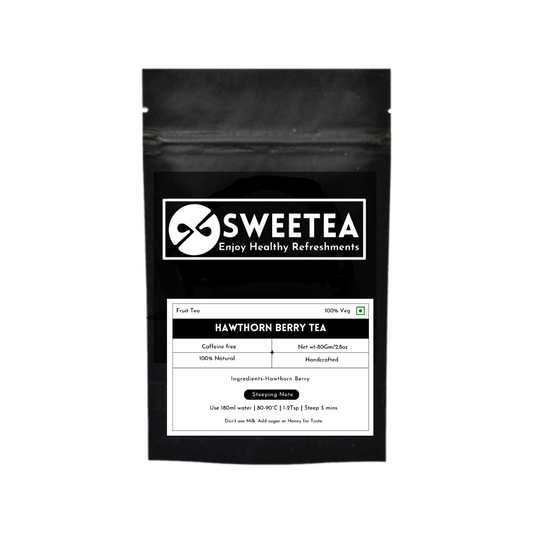
Why Choose Sweetea Hawthorn Berry Tea?
Sweetea can position Hawthorn Berry Tea as a transparent, naturally caffeine-free fruit infusion rather than a miracle heart cure.
Key points include:
-Pure dried hawthorn berry
-Practical loose tea-cut format
-Naturally caffeine-free
-Tart, fruity and earthy character
-Suitable for hot or cold brewing
-No added colours
-No artificial flavours
-No unnecessary sweetening
-Clear brewing and safety guidance
-Backed by a biotechnologist
-Crafted by Sweetea since 2016
Suggested product positioning:
A traditional berry infusion for people who enjoy naturally tart, caffeine-free herbal beverages and mindful daily wellness—without exaggerated medical promises.
Frequently Asked Questions
Is hawthorn berry tea good for the heart?
Hawthorn has a long cardiovascular tradition, and certain standardised extracts have been studied. Evidence for ordinary hawthorn berry tea is limited. It should not be used to treat heart disease without medical supervision.
Does hawthorn berry tea lower blood pressure?
Some hawthorn extracts have shown modest blood-pressure effects, but berry tea has not been sufficiently studied. Combining it with blood-pressure medicine could potentially make blood pressure too low.
Can I drink hawthorn tea while taking heart medication?
Consult your cardiologist or pharmacist first. Hawthorn may interact with medicines affecting blood pressure, circulation or heart function.
Does hawthorn berry tea contain caffeine?
Pure hawthorn berry tea is naturally caffeine-free.
Can hawthorn tea be consumed before bed?
It contains no caffeine and may be consumed in the evening if well tolerated. It is not a proven sleeping treatment.
Is hawthorn tea a detox drink?
No. Hawthorn does not remove unspecified toxins from the blood. The liver and kidneys perform the body’s major detoxification functions.
Can hawthorn tea clear blocked arteries?
No reliable evidence shows that hawthorn berry tea clears arterial blockages.
Can people with high cholesterol drink it?
They should consult a healthcare professional, particularly when taking cholesterol or cardiovascular medicines. Hawthorn tea should not replace prescribed treatment.
Can pregnant women drink hawthorn tea?
Safety during pregnancy and breastfeeding is not well established. Avoid regular medicinal use unless approved by a qualified healthcare professional.
Can children drink hawthorn berry tea?
Do not give it regularly to children without paediatric guidance.
Is hawthorn berry tea sour?
It is usually mildly tart and fruity. It is generally less sharply sour than hibiscus.
How long should hawthorn berries steep?
Lightly crushed berries generally need 10–15 minutes. A gentle 10-minute simmer creates a stronger infusion.
Conclusion
Hawthorn berry tea is best suited to people looking for a traditional, naturally caffeine-free and mildly tart fruit infusion.
It offers:
-A distinctive berry flavour
-A caffeine-free alternative to true tea
-Natural plant polyphenols
-Hot and cold brewing possibilities
-A connection to long-standing herbal traditions
-An unsweetened alternative to packaged beverages
Its historical association with the heart makes responsible communication especially important.
Most cardiovascular studies used standardised hawthorn extracts, frequently prepared from leaves and flowers. They did not prove that homemade hawthorn berry tea treats heart failure, high blood pressure, irregular heartbeat or blocked arteries.
Choose hawthorn berry tea for its natural character and daily beverage experience—not as a replacement for cardiovascular diagnosis or treatment.
At Sweetea, honest wellness means respecting both traditional knowledge and the limits of scientific evidence.
Medical disclaimer: This article is for education and general wellness information only. Hawthorn berry tea is not intended to diagnose, prevent, treat or cure cardiovascular disease. Consult a qualified healthcare professional before using hawthorn if you have heart disease, abnormal blood pressure, take medication, are pregnant, breastfeeding or considering giving it to a child.